
HVAC Sizing Guide
Get an accurate estimate for the right size heating and cooling system for your home
Proper System Sizing
A lot of real science is included in the methods of calculation when selecting the right size central air conditioner for your home. For instance, one of these methods is a Residential Load Calculation.
Another method for sizing air conditioners is determining the size of the air conditioner system that’s currently in place. Manufacturers normally don’t list the size of the air conditioner unit, but the system capacity is almost always coded into the model number of the outdoor unit.
Model Number Conversion Guide
In most cases you can use the conversion information below to determine the size of your existing air conditioner system. Use the system model number NOT the serial number.
Warning: Do Not Oversize Your Air Conditioner
Do not make the mistake of buying an air conditioner that’s too large for the space. It doesn’t take long to realize that a “short cycle” occurs when the compressor doesn’t run long enough to properly remove humidity from your indoor air.
A short cycling AC system isn’t the only concern; in most cases the system will cycle on and off more often, leading to increased wear, higher operating costs, and reduced overall comfort.
Proper air conditioner sizing is critical to optimizing performance.
Find Your Climate Zone
Use the color-coded map to determine your home’s climate zone based on your location.
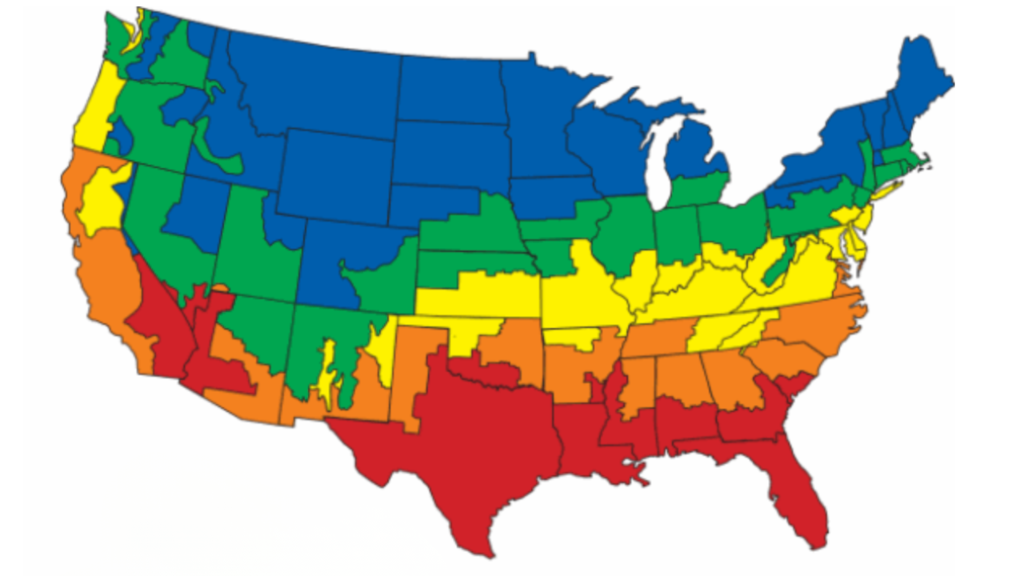
How to Use: Reference the color zones above to determine what climate zone you live in. Then find your square footage under your climate zone to determine the recommended equipment size.
| ZONE 1 | ZONE 2 | ZONE 3 | ZONE 4 | ZONE 5 | |
|---|---|---|---|---|---|
| 1.5 Tons | 600–900 sf | 600–950 sf | 600–1000 sf | 700–1050 sf | 700–1100 sf |
| 2 Tons | 901–1200 sf | 951–1250 sf | 1001–1300 sf | 1051–1350 sf | 1101–1400 sf |
| 2.5 Tons | 1201–1500 sf | 1251–1550 sf | 1301–1600 sf | 1351–1650 sf | 1401–1650 sf |
| 3 Tons | 1501–1800 sf | 1551–1850 sf | 1601–1900 sf | 1651–2000 sf | 1651–2100 sf |
| 3.5 Tons | 1801–2100 sf | 1851–2150 sf | 1901–2200 sf | 2001–2250 sf | 2101–2300 sf |
| 4 Tons | 2101–2400 sf | 2151–2500 sf | 2201–2600 sf | 2251–2700 sf | 2301–2700 sf |
| 5 Tons | 2401–3000 sf | 2501–3100 sf | 2601–3200 sf | 2751–3300 sf | 2701–3300 sf |
Important Sizing Factors
These factors can affect your system size requirements
Insulation Quality
Better insulation means less heating and cooling capacity needed
Home Location
Climate zone significantly impacts your system size requirements
Ceiling Height
Higher ceilings require more capacity to heat and cool effectively
Number of Windows
More windows mean more heat gain in summer and loss in winter